
Imagine Sisyphus
Reclaiming the defiance of Camus

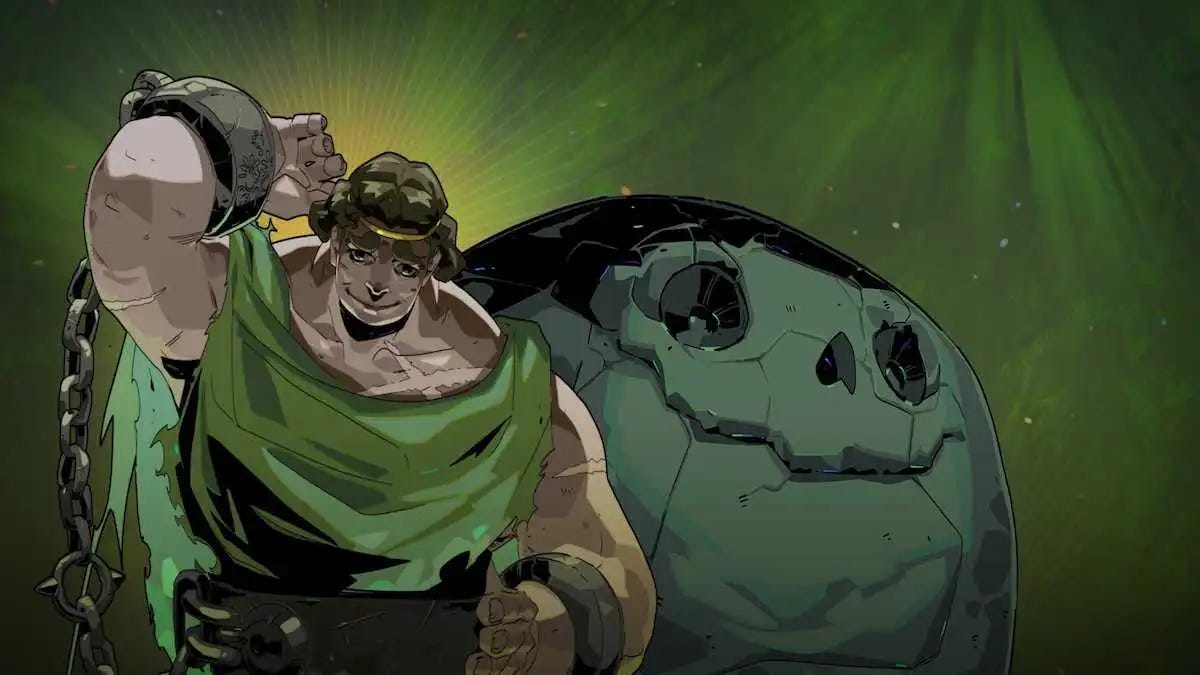
“You must imagine Sisyphus happy.”
-Albert Camus
This is perhaps the most famous quote that lingers in the public mind from the late great absurdist philosopher Albert Camus (pronounced “ka-moo”, he was French. Much to my idiot embarrassment, I was familiar with Albert “Cam-uss” from reading his name but kept reminding myself that “I still need to check out this “Ka-moo” fellow that I keep hearing people talk about.” It was mortifyingly recently that I realized they were the same person.”)
While I’m sure most are familiar with the Greek character Sisyphus, you know what they say about assumptions, so I will quickly give a quick background on the story of the character.
In Greek mythology, the character of Sisyphus essentially deceived the gods in such a way as to not only escape death himself, but also temporarily capture Death itself (Thanatos in most tellings), which caused no one to die on earth during this period. After a time of skirting the consequences for these actions, Sisyphus finally arrived in the underworld and was cursed by Hades to roll a giant boulder up a hill for eternity. Whenever Sisyphus would almost succeed in reaching the top, Hades had enchanted the boulder to escape his grasp and roll all the way back to the bottom, dooming Sisyphus to repeat this pointless cycle for eternity. As such, he became a symbol of the foolishness of defying one’s fate, and the will of the gods.
As happens with many pithy quotes in the public consciousness, “You must imagine Sisyphus happy.” has arguably lost much of its original nuance. Often, I now hear it used to simply mean, “You must accept your fate.” While the acceptance of fate is doubtless irrevocably tangled up with the story of Sisyphus himself, this simplistic interpretation misses the unique point of Camus’ original statement almost entirely.
If simple acceptance were the message, then one could just as easily use the phrase, “You must imagine Sisyphus resigned.” While radical acceptance is no doubt useful, it’s a mistake to assume that radical acceptance is synonymous with happiness.
In other interpretations, the happiness of Sisyphus is sometimes taken to mean that one should learn to genuinely love one’s suffering or fate, perhaps more akin to Nietzsche’s concept of “amor fati”. While no doubt nearer to Camus’ message than simple acceptance, even this interpretation loses some of the tone and directionality of what Camus intended.
“You must imagine Sisyphus happy” was Camus’ prescription for how we must array ourselves in the presence of the Absurd. To explain it simply (too simply, perhaps), the Absurd is essentially the incongruence between our personal striving or our feelings of importance and value in the face of an indifferent universe that has no care for our desires.
In the character Sisyphus it is acknowledged that this fate is inescapable. But in this context Sisyphus’ happiness is not a sign of monkish acceptance but is instead an act of active defiance. Sisyphus’ fate is meant to punish him. He is unable to defy this cruel fate through the mechanism of escape. Therefore, the only mechanism left to him to salvage any sense of autonomy and human dignity is to defy the very nature of the punishment itself, and to within his own mind no longer experience it as punishment. In this way he rebels and so escapes the judgment of the gods in the only way left available to him. If anything, this more calls to mind the final line of Dylan Thomas’ poem “Go Not Gently into that Good Night.”
“Rage, rage against the dying of the light.”
Where some dignity might be found in simple acceptance, imagining Sisyphus happy is an argument for regaining dignity through an active defiance of the crushing power of the inevitable. To say, “I accept my fate, but I control how I stand before it, and I will not allow it to control my mind and attitudes.”
To be clear, while I find much to like in absurdism, I don’t call myself an absurdist anymore. I increasingly lean more towards something like the more “monkish” radical acceptance I mentioned previously, at least in my day-to-day life. At very least, that is my current goal. However, life for all of us is difficult, some days much worse than others. On the days when shit gets bleak, I still find value in going on the offensive, and, like Camus’ Happy Sisyphus, looking up to say, “Fuck you, Fate. You might technically control what happens to my body, but you don’t get to control my mind. In my mind, I am free. And I will experience my life how I choose.”
Is this statement strictly true? Probably not. But it’s useful as hell. When you’re dying at the bottom of a hole, don’t question the quality of the escape rope.
It’s a luxury you can’t afford.
I enjoyed your write up. Thank you. 'Rebellion' is a part of it, admittedly one of my favorites; it's healthy to be mischievous.
It has been a long time since I last read "The Myth of Sisyphus" by Camus. It's one of my favorite books (for sure in the top 5) even if I get it wrong more than anything else.
To reciprocate, I also look at discovery. Throughout the book, Camus repeats words such as awareness, recognition, enlightenment, and so on. Camus states via translator Justin O'Brian: "But one day the 'why' arises and everything begins in that weariness tinged with amazement." When I combine this quote with the understanding that, for Camus, "the absurd" is a condition, it is here where a person also discovers, and it is this point of discovery where I feel Sisyphus and Camus offer another direction toward how life is worth living.
Certainly, this is me reading within my condition (I'm not a French speaker... etc.), nevertheless, this is something I got out of my reading along with what is mentioned in the write up.
I’ve actually never read this quote in its context and took it way too literally (that is, imagining Sisyphus legitimately enjoying the act of pushing a boulder up the hill, and rejoicing to be able to do it every day). It’s become a bit of a mantra when I’m stuck in an endless loop of mundane, repetitive tasks, like doing chores in an apartment with three small children who make messes faster than I can clean them.